用 Vocab 开始积累真正用得上的英语词汇
免费下载。用间隔重复、主题词表和母语者发音学得更快,也把学过的词真正记住。
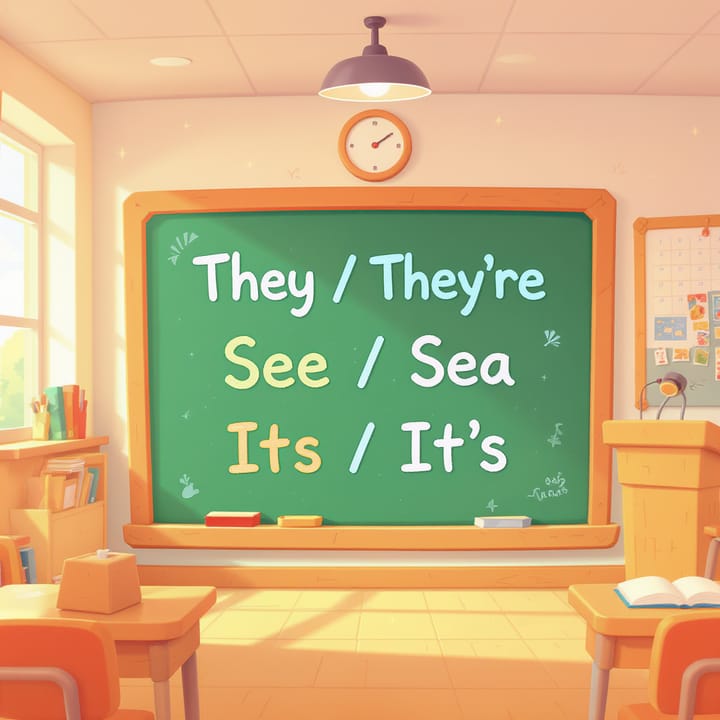
搞定10大英语同音词:2025写作零错误终极指南
嗨,朋友!你是否也曾把“your welcome”写成“you're welcome”,然后感觉有点尴尬?😅 别担心,不只你一个人!这种错误是混淆英语同音词的典型例子。英语同音词(homophones)是指那些发音相同,但拼写和意思都不同的单词,它们甚至能把母语者都搞糊涂。从A2到C1的各个水平都会遇到它们,而能够区分它们,正是熟练掌握英语的标志。
好消息是,你完全可以一劳永逸地解决这个问题。你不需要记住成百上千条规则,只需理解那些最常见词对背后的逻辑即可。
今天,我们将用简单的规则和记忆技巧,帮你攻克10对最棘手的英语同音词。无论你是写商务邮件、大学论文,还是给朋友发消息,这份指南都将帮助你自信、无误地书写。我们开始吧!🚀
什么是英语同音词?为何如此重要?
同音词(homophones)是发音上的“双胞胎”,但拼写和含义却截然不同。想象一下,当你说“I'll see you by the sea”(我们海边见),口语中“see”(看见)和“sea”(大海)听起来毫无区别。但在书面上,差别就大了!一个小小的拼写错误可能会完全改变句子的意思,比如“I need more flour”(我需要更多面粉)和“I need more flower”(我需要更多花),或者仅仅是暴露了你对细节的不够严谨。
为什么这如此重要?在非正式交流中,这或许可以被原谅。但在专业的学术或工作环境中,这类错误可能会影响你的专业形象。正确使用同音词是语言能力强的体现,它表明你不仅认识单词,更能理解它们之间的细微差别和语境。让我们一起来打磨这项技能吧!
10个最常见的英语同音词:规则与实例
我们将为你解析每一对(或三胞胎!)同音词,提供简单的解释、适用于不同场景的大量例句,以及记忆小窍门。
1. Their / There / They’re
这组词堪称混淆之王。但只要记住它们各自的角色,一切就都简单了!
- Their - 这是所有格代词,回答“谁的?”这个问题。它表示归属。记忆技巧:这个词里有“heir”(继承人),继承人拥有某物。
- "The students forgot their books." / 学生们忘了带他们的书。
- "It was their decision to move to another city." / 搬到另一个城市是他们的决定。
- "I admire their commitment to the project." / 我钦佩他们对这个项目的投入。
- "All the cats had finished their food." / 所有的猫都吃完了它们的食物。
- "Could you ask them for their opinion?" / 你能问问他们的意见吗?
- There - 这是地点副词,回答“在哪里?”。它指向某个位置,或用于“there is/are”句型。记忆技巧:这个词里有“here”(这里),同样指向地点。
- "Your keys are over there on the table." / 你的钥匙在那边的桌子上。
- "There is a good reason for this." / 这么做是有充分理由的。
- "Let's stop there for a moment." / 我们先在那里停一下。
- "There are many people waiting outside." / 外面有很多人在等。
- "I've never been there before." / 我以前从未去过那里。
- They’re - 这是“they are”(他们是)的缩写。记忆技巧:如果能替换成“they are”,就放心用“they're”。
- "They’re going to the cinema tonight." / 他们今晚要去看电影。
- "They’re the best team in the league." / 他们是联盟里最强的队伍。
- "I think they’re ready for the test." / 我认为他们已经为考试准备好了。
- "Look, they’re waving at us!" / 看,他们在向我们挥手!
- "If they’re late, we'll start without them." / 如果他们迟到,我们就自己开始了。
2. Your / You’re
这是另一个经典的易错点。规则和上面一样:关键在于是否是缩写。
- Your - 所有格代词,回答“你的/你们的?”。
- "Is this your bag?" / 这是你的包吗?
- "I really like your new haircut." / 我真的很喜欢你的新发型。
- "Please mind your step." / 请注意脚下。
- "What is your favorite color?" / 你最喜欢的颜色是什么?
- "Can I borrow your pen?" / 可以借用一下你的笔吗?
- You’re - “you are”(你是/你们是)的缩写。检验方法:能否替换成“you are”。
- "You’re an excellent student!" / 你是一名优秀的学生!
- "I think you’re making a mistake." / 我觉得你正在犯一个错误。
- "You’re always welcome here." / 我们随时都欢迎你。
- "When you’re ready, we can leave." / 你准备好了我们就可以出发。
- "You’re doing a great job." / 你做得非常棒。
3. Its / It’s
这里的混淆源于我们习惯用撇号(')来表示所有格。但这是一个例外!
- Its - 用于无生命物体和动物的所有格代词,回答“它的?”。没有撇号!
- "The dog wagged its tail." / 那只狗摇着它的尾巴。
- "The company announced its quarterly earnings." / 公司公布了其季度收益。
- "The phone fell and its screen cracked." / 手机摔了,它的屏幕裂了。
- "The tree has lost all of its leaves." / 这棵树的叶子都掉光了。
- "Each country has its own traditions." / 每个国家都有其自己的传统。
- It’s - “it is”或“it has”的缩写。检验方法:能否替换成“it is”或“it has”。
- "It’s a beautiful day!" / 今天天气真好! (It is a...)
- "It’s been a long time since we last met." / 我们上次见面已经很久了。 (It has been...)
- "It’s important to double-check your work." / 复查你的工作非常重要。
- "It’s raining outside." / 外面在下雨。
- "Hurry up, it’s almost midnight!" / 快点,马上就午夜了!
4. To / Too / Two
它们听起来完全一样,但意思天差地别。语境是你最好的帮手。
- To - 表示方向的介词(“去”、“到”)或不定式动词前的标志。
- "I need to go to the store." / 我需要去商店。
- "She gave the book to me." / 她把书给了我。
- "They are learning to speak English." / 他们正在学习说英语。
- "Let's go to the park." / 我们去公园吧。
- "I promise to call you later." / 我保证稍后会打电话给你。
- Too - 意思是“也”或“太”。记忆技巧:多出来的一个“o”暗示着“过多”(太)或“添加”(也)。
- "This coffee is too hot. I want to go, too." / 这咖啡太烫了。我也想去。
- "He is too tired to continue." / 他太累了,无法继续。
- "Are you coming with us, too?" / 你也和我们一起来吗?
- "It's never too late to learn." / 学习永远不嫌晚。
- "I ate too much cake." / 我吃了太多蛋糕。
- Two - 数字2。
- "I have two cats." / 我有两只猫。
- "She bought two tickets for the show." / 她买了两张演出票。
- "The meeting is at two o'clock." / 会议在两点钟。
- "It takes two to tango." / 一个巴掌拍不响(谚语)。
- "I'll have two scoops of ice cream, please." / 请给我两个冰淇淋球。
5. By / Buy / Bye
这三兄弟在日常对话中非常常见。
- By - 一个多功能介词,表示“在...旁边”、方式(“通过”)、作者或截止日期。
- "The book was written by Stephen King. I'll be there by 5 PM." / 这本书是斯蒂芬·金写的。我会在下午5点前到那里。
- "Can you send the report by email?" / 你能通过电子邮件发送报告吗?
- "He lives by the river." / 他住在河边。
- "I was surprised by the news." / 我被这个消息惊到了。
- "Please finish this task by Friday." / 请在周五前完成这项任务。
- Buy - 动词“购买”。
- "I need to buy some milk." / 我需要买些牛奶。
- "Where did you buy that dress?" / 你那件连衣裙是在哪里买的?
- "They want to buy a new car." / 他们想买一辆新车。
- "I'll buy you lunch today." / 今天我请你吃午饭(字面意:我给你买午饭)。
- "Money can't buy happiness." / 金钱买不到幸福。
- Bye - “goodbye”(再见)的缩写。
- "See you tomorrow, bye!" / 明天见,拜拜!
- "He waved bye as the train departed." / 火车开动时,他挥手告别。
- "It's time to say bye." / 是时候说再见了。
- "Bye for now!" / 先这样,再见!
- "Okay, bye! Talk to you soon." / 好的,拜拜!回头聊。
6. Wear / Where
开头的[w]和[h]音可能会让人混淆,但它们的意思完全不同。
- Wear - 动词“穿着”(衣物、配饰)或“磨损”。
- "What are you going to wear to the party?" / 你打算穿什么去派对?
- "He always wears a hat." / 他总是戴着一顶帽子。
- "You should wear sunscreen." / 你应该涂防晒霜。
- "The tires on the car are starting to wear out." / 汽车的轮胎开始磨损了。
- "She doesn't like to wear bright colors." / 她不喜欢穿颜色鲜艳的衣服。
- Where - 疑问词“哪里?”、“去哪里?”或连词。
- "Where are you from?" / 你来自哪里?
- "Where did I leave my glasses?" / 我把眼镜放哪儿了?
- "This is the house where I grew up." / 这是我长大的房子。
- "Where should we go for dinner?" / 我们该去哪里吃晚饭?
- "I don't know where he is." / 我不知道他在哪里。
7. See / Sea
一对简单的组合,但在快节奏的对话中很容易混淆。
- See - 动词“看见”、“明白”。
- "I can see you!" / 我能看见你!
- "Do you see what I mean?" / 你明白我的意思吗?
- "I went to see the doctor yesterday." / 我昨天去看医生了。
- "Let's wait and see what happens." / 我们等等看会发生什么。
- "Long time no see!" / 好久不见!
- Sea - 名词“大海”。
- "I love swimming in the sea." / 我喜欢在海里游泳。
- "The ship sailed across the open sea." / 轮船在开阔的海面上航行。
- "We had a beautiful view of the sea from our hotel room." / 从我们的酒店房间可以看到美丽的海景。
- "There are many strange creatures in the deep sea." / 深海里有很多奇怪的生物。
- "He could smell the salt from the sea." / 他能闻到来自大海的咸味。
8. Sun / Son
又是一对语境决定一切的词。
- Sun - 名词“太阳”。
- "The sun is shining brightly today." / 今天阳光明媚。
- "We watched the sun set over the horizon." / 我们看着太阳从地平线落下。
- "Plants need the sun to grow." / 植物生长需要太阳。
- "Don't look directly at the sun." / 不要直视太阳。
- "The Earth revolves around the Sun." / 地球围绕太阳旋转。
- Son - 名词“儿子”。
- "My son is five years old." / 我儿子五岁了。
- "He is the proud father of a newborn son." / 他是一位刚出生的儿子的骄傲父亲。
- "Their son is studying at university." / 他们的儿子正在上大学。
- "Like father, like son." / 有其父必有其子(谚语)。
- "She called her son to wish him a happy birthday." / 她打电话给儿子祝他生日快乐。
9. Right / Write
因为“write”中不发音的‘w’,这里很容易出错。
- Right - 有多个意思:“右边的”(与左边相对)、“正确的”、“权利”。
- "Turn right at the corner. That's the right answer." / 在拐角处向右转。那是正确答案。
- "You have the right to remain silent." / 你有权保持沉默。
- "I'll be right back." / 我马上回来。
- "Is this the right way to the station?" / 去车站是走这条路吗?
- "Everyone has basic human rights." / 每个人都拥有基本人权。
- Write - 动词“写”。
- "Please write your name here." / 请在这里写下你的名字。
- "I need to write an email to my boss." / 我需要给老板写一封电子邮件。
- "She loves to write poetry." / 她喜欢写诗。
- "Did you write down the address?" / 你把地址写下来了吗?
- "He is learning to write in cursive." / 他正在学习写草书。
10. Accept / Except
这两个词发音非常相似,但意思几乎相反。在正式通信中,千万不要混淆它们。
- Accept(接受,同意)- 动词。以“ac”开头,就像“access”(进入)一样——你允许某事进入,接受它。
- "I accept your apology." / 我接受你的道歉。
- "She decided to accept the job offer." / 她决定接受这份工作邀请。
- "Please accept this gift as a token of our gratitude." / 请接受这份礼物,以示我们的感谢。
- "He finds it hard to accept criticism." / 他觉得很难接受批评。
- "Do you accept credit cards here?" / 你们这里接受信用卡吗?
- Except(除了,除去)- 介词或连词。以“ex”开头,就像“exclude”(排除)或“exit”(出口)一样。
- "Everyone is here except John." / 除了约翰,大家都在这里。
- "The store is open every day except Sunday." / 这家商店除了周日,每天都开门。
- "I like all kinds of fruit except for bananas." / 除了香蕉,我喜欢所有水果。
- "He ate everything on his plate except the vegetables." / 他吃光了盘子里所有的东西,除了蔬菜。
- "There was nothing to do except wait." / 除了等待,别无他法。
自我检测:迷你测验
现在,让我们来检验一下你的学习成果!实践是成功的关键。在每个句子中填入正确的单词。答案在下面哦!😉
- (They're / Their / There) going to visit ... new house.
- (It's / Its) a shame that the team lost ... final game.
- Could you ... me a ticket ... the concert? I want to go, ... !
- (Your / You're) not going to believe what ... sister said.
- I can't ... your offer, ... for one condition.
- My ... loves to play in the ... .
- I need to ... a new coat to ... for the winter.
- ... do you think you are going?
- Please ... down the correct answer on the ... side of the page.
- I'll be ... in a minute, just have to say ... to my mom.
测验答案:
- They're, their
- It's, its
- buy, to, too
- You're, your
- accept, except
- son, sun
- buy, wear
- Where
- write, right
- there, bye
怎么样,都做对了吗?如果犯了几个错误,完全正常!这是学习过程的一部分。关键是要理解错误的原因,并继续练习。把这个页面收藏起来,当你不确定时随时回来查看。在评论区写下你自己的例子来巩固学习吧!
自信地使用同音词,是你迈向流利、地道英语的下一步。祝你好运!👍
Additional Materials
- 🎧 通过 Vocab app 的播客提升你的学习效果 - 这是一个绝佳的资源,通过引人入胜的音频内容来提高你的听力技巧和词汇量。
- 📱 使用 Vocab app 应用来增强你的词汇量 - 一个强大的工具,旨在帮助你高效地掌握新单词。
推荐文章
5分钟
5分钟测试你的英语词汇量
通过免费测试,精确测出你的词汇水平。从基础单词到高级词汇,即刻获得 A1-C2 评分,看看你真正掌握了多少英语单词。